
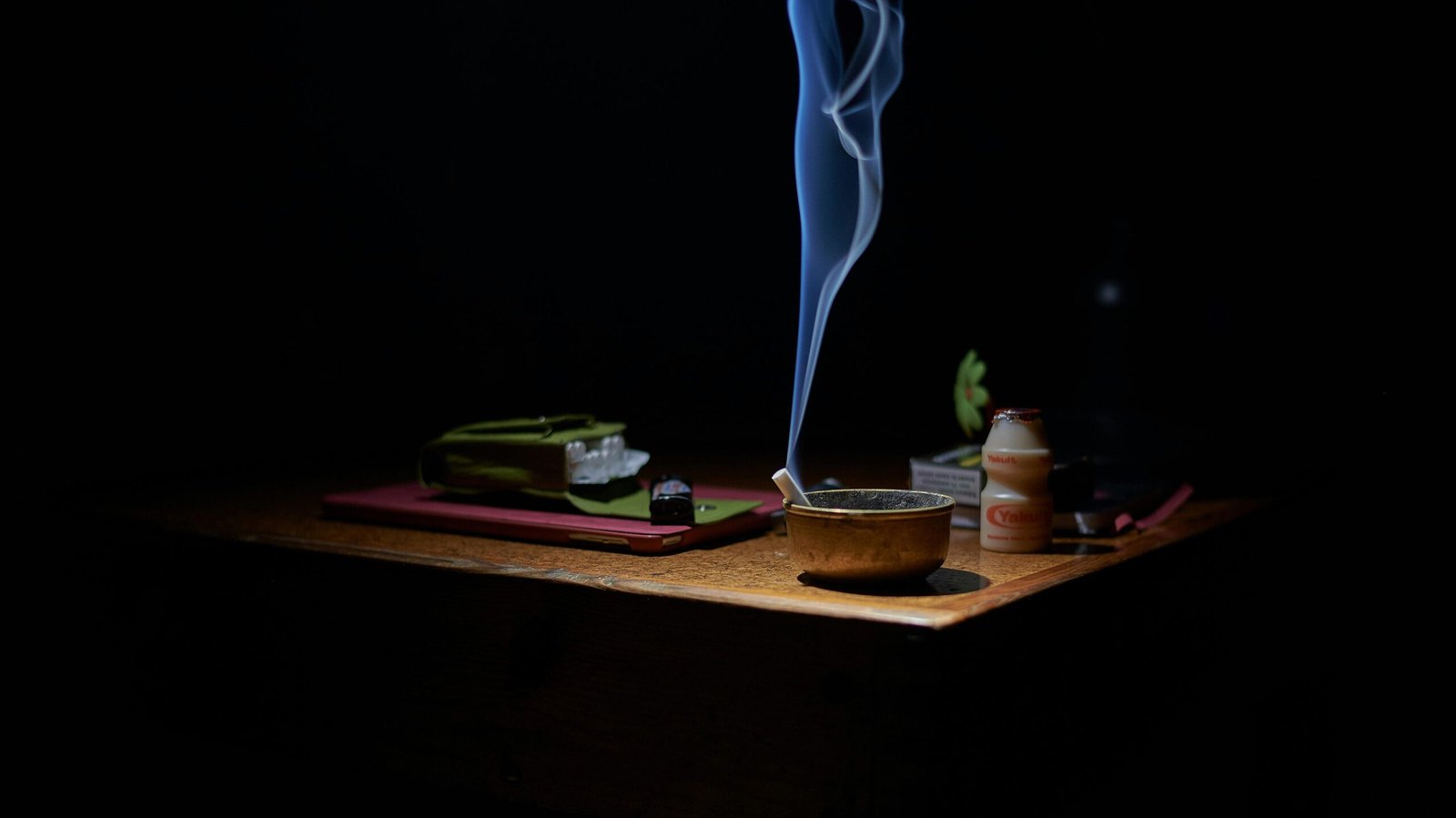
We spend nearly 90% of our time indoors, yet we rarely treat indoor air with the same urgency as outdoor smog.
In India, our indoor air quality (IAQ) is uniquely challenged by three “Cultural Culprits”: the kitchen (Chulha/Tadka), religious practices (Agarbatti/Diya), and pest control (Mosquito Coils).
The Assessment: Identifying the Sources
- The “Cigarette Equivalent”: Research shows that burning one mosquito coil in a closed room is equivalent to smoking roughly 75 to 137 cigarettes.
- The Agarbatti Effect: Incense sticks release high concentrations of Particulate Matter (PM2.5), formaldehyde, and carbon monoxide. In a small puja room, these levels can skyrocket within minutes.
- The Kitchen ‘Tadka’: The high-heat frying common in Indian cooking releases Volatile Organic Compounds (VOCs) and ultrafine particles. Without a powerful chimney, these stay suspended in your living area for hours.
The “Slow Burn” of Indoor Toxins
In the Operating Room, we use sophisticated scavengers to remove anesthetic gases because we know even trace amounts can be harmful over time. Your home needs the same “scavenging” mindset.
1. Chronic Bronchitis & the Non-Smoker
Many Indian women present with COPD (Chronic Obstructive Pulmonary Disease) despite never having touched a cigarette. This is often “Chulha Syndrome” or “Incense-induced Bronchitis.” The constant inhalation of fine carbon soot causes:
- Goblet Cell Hyperplasia: Your airways overproduce mucus to trap the soot, leading to a chronic “smoker’s cough.”
- Alveolar Remodeling: Long-term exposure to mosquito coil fumes (pyrethroids) can cause the air sacs to lose elasticity, similar to emphysema.
2. The Formaldehyde Factor
Cheap incense and mosquito coils often contain Formaldehyde—a known carcinogen. From an anesthesia perspective, formaldehyde is a potent airway irritant that can trigger Laryngospasm (vocal cord closure) in sensitive individuals or children with hyper-reactive airways.
3. Carboxyhemoglobinemia
Burning coils or “Angithis” (coal heaters) in closed rooms produces Carbon Monoxide (CO). CO has a 200x higher affinity for hemoglobin than oxygen. It creates Carboxyhemoglobin, effectively “suffocating” your tissues even if you are breathing normally. This leads to the morning headaches many people mistake for “bad sleep.”
Management: Cleaning Your Indoor Air
- The “Cross-Ventilation” Rule: In India, we often keep windows closed for security or AC efficiency. You must ensure 15 minutes of cross-ventilation (opening opposite windows) twice a day to flush out VOCs.
- The Kitchen Upgrade: An electric chimney is not a luxury; it is medical equipment. Ensure it has a suction capacity of at least 1200 m3/hr for Indian cooking.
- Ditch the Coils: Switch to mosquito nets or liquid vaporizers. If you must use a coil, place it outside the door/window, never inside the bedroom.
- Air Purifying Plants: While not a replacement for HEPA filters, plants like the Snake Plant (Sansevieria) and Areca Palm are excellent at absorbing CO2 and certain VOCs at night.
To truly manage indoor air in an Indian household, you need a combination of mechanical filtration and source control.
- The HEPA Filter (The Gold Standard): An air purifier is no longer a luxury in urban India; it is a necessity. Ensure your unit has a True HEPA (H13 or H14) filter like these from Eureka Forbes. In anesthesia, we use HEPA filters in breathing circuits to prevent cross-contamination because they capture 99.97% of particles as small as 0.3 microns.
- Look for a high CADR (Clean Air Delivery Rate). For an Indian bedroom, you want the air to be “scrubbed” at least 5 times per hour.
- HEPA-Filtered Vacuuming: Traditional sweeping (jhadu) or even basic vacuums without HEPA filters are “dust redistributors.” They suck in large dust and blow out the microscopic PM2.5 through the exhaust.
- Using a vacuum with a certified HEPA exhaust like these from Kent ensures that the dust stays in the machine. This is critical for mattresses and sofas where dust mites and skin cells (major allergens) accumulate.
The Doctor’s Corner: Why HEPA Matters to Your Heart
From a clinical perspective, we worry about antigenic load. When you use a standard vacuum or a broom, you create a “dust cloud” that stays suspended for hours.
- Bronchospasm: For children or elders with “sensitive” airways, this triggers an immediate inflammatory response.
- The “Silent” Insult: Even if you don’t cough, your immune system is working overtime to neutralize these inhaled particles, leading to chronic low-grade inflammation—a known precursor to cardiovascular disease.
Actionable Tips: Do This Today
- The “HEPA Duo”: invest in a portable HEPA air purifier for the bedroom and a HEPA-rated vacuum cleaner.
- Vacuum FIRST, Mop SECOND: Use your HEPA vacuum to remove the bulk of the dry dust from floors and fabrics. Follow this with a wet mop (pocha) to “trap and kill” any remaining surface particles. This two-step process is the only way to achieve clinical-grade cleanliness.
- The 15-Minute Flush: Open your windows fully for 15 minutes every morning after the sun is up (to avoid the early morning outdoor peak).
- Puja Room Ventilation: If you burn Agarbatti or Diyas, ensure the door is open and a small exhaust fan or window is active in that room.
- Mattress Hygiene: Once a week, use the HEPA vacuum on your mattresses and curtains. These are the biggest “dust sinks” in Indian homes and are often the hidden cause of morning sinus congestion.
- Check Your Chimney Filter: If your kitchen chimney hasn’t been cleaned in 3 months, it is likely recirculating grease and toxins rather than removing them. Clean it today.
- Filter Maintenance: In India, a HEPA filter can clog in 4 months rather than the advertised 12. Check your vacuum and purifier filters monthly—if they look charcoal gray, they are no longer protecting you.
- The “No-Shoe” Policy: Leave shoes at the entrance. In India, shoes carry road dust, lead, and pesticides into your carpets, where they become airborne PM10.
Medical & Financial Disclosure: This content is for educational purposes. We are independent and do not receive commissions from mentioned links. [Read our full disclaimer here].